
Most artists approach SEO the same way: pick a few keywords, write an About page, and hope the right people find them. That advice treats every artist as if they share a single business model. They do not. An artist selling four-figure originals is optimising for a handful of considered buyers, not traffic volume. One selling editioned prints needs collection and size pages that answer product-shaped searches. One taking commissions needs process and pricing pages that pre-empt objections before they are raised.
This analysis segments artists by how they actually earn: one-off originals, editioned prints, commissions, and licensing. Naming your revenue model first prevents generic “follow me” SEO and points you toward the pages your buyers genuinely need. We will examine what an artist portfolio must actually do, why the revenue model comes before optimisation, and how each of the four models changes the proof you publish. We will also cover how to describe editions and sizes, the two pages that pre-empt commission objections, and what stays the same across all four models. Finally, we will set out what this framework does not claim before showing where to start.
What a Website for an Artist Portfolio Actually Has to Do
Most artists are handed the same short list: an about page, an image gallery, a contact form and social links. It is not wrong, just unfinished. It says nothing about who arrives or what they need to do next.
Someone searching these terms is typically in a research-and-planning mindset, not comparing prices. The person behind them is deciding what their site should contain.
A portfolio website for an artist has one job: put a buyer, curator or commissioning client in a position to trust the work and act on it. Everything else either supports that or is decoration. For the shared groundwork, see our guide to an art website for artists.
Which pages that requires changes with the model. A print buyer searches for a product: size, edition or price. An originals buyer searches for the artist. A commissioning client searches for process and quote.
So what should be in an artist web portfolio has four good answers. The rest of this piece gives each one, naming the pages, the proof and the buyer behind it.
This is a structure argument, not a page count one. A small site organised around the right model beats a large site organised around none.
Name Your Revenue Model Before You Optimise Anything
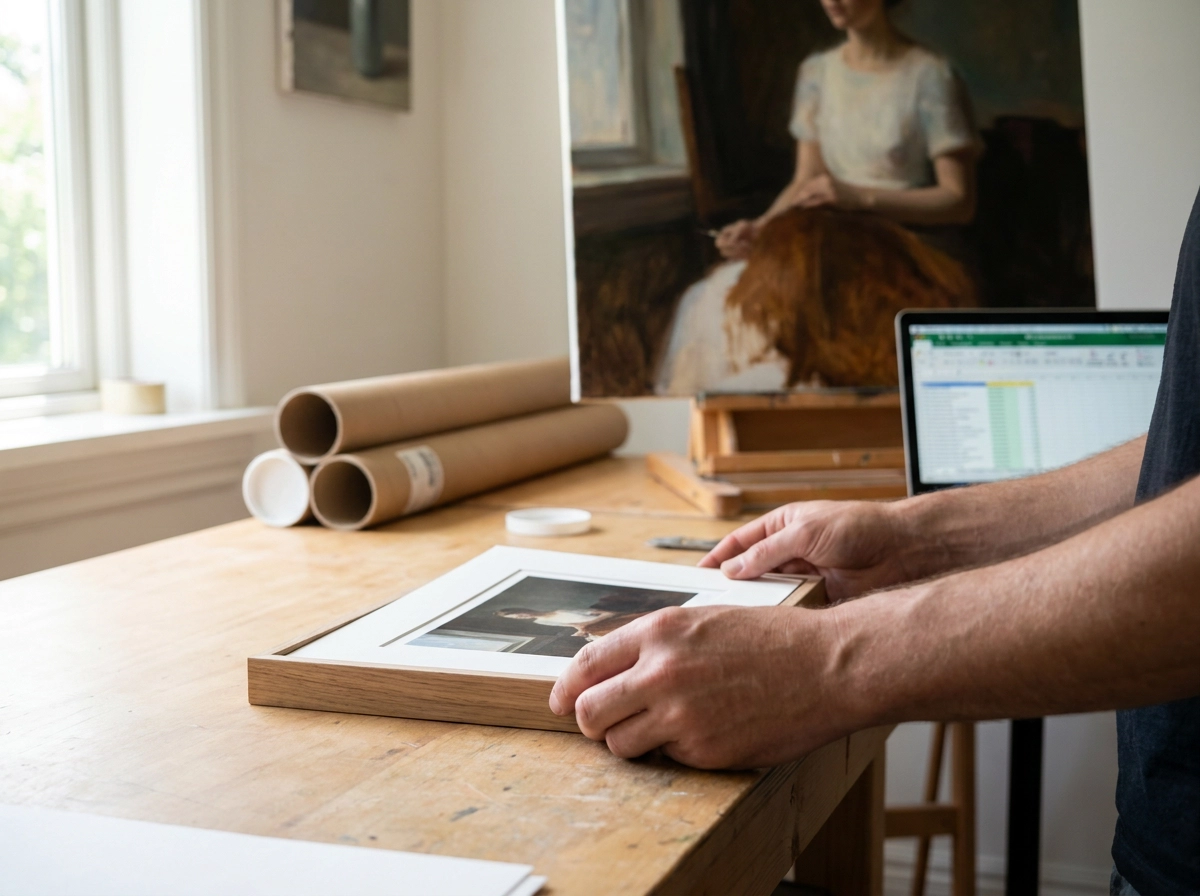
Start with four models covering most working artists: one-off originals, editioned prints, commissions, and licensing existing images. Many run two at once; the usual failure is addressing different buyers with one set of pages.
Chasing traffic is borrowed from retail. A four-figure-original artist may have only a handful of realistic buyers a year. Qualified attention beats volume: a loosely related head-term ranking is worth less than the right collector’s enquiry. Resources like The Brand Express’s SEO playbook for abstract artists target buyers, not browsers.
The Productivity Commission’s report on Aboriginal and Torres Strait Islander visual arts and crafts found artwork sales through art centres of about $35 million in 2019-20 across roughly 7,300 artists, averaging just over $3,200 each in average income for artists who sold through an art centre. A few considered sales can be real income.
The Brand Express positions SEO as a revenue lever for artists and sole traders, not a marketing accessory. That is its claim; the page-by-page mapping here is recommended, not a sourced finding.
Naming the model first guards against follow-me SEO: pages chasing your own name and social followers, wrong in all four models.
Revenue Model 1: One-Off Originals
For artists whose income sits in originals, the buyer is not a crowd. A handful of private collectors, institutional or corporate buyers, and interior specifiers need certainty about the work and its paperwork before they commit.
Build individual work pages carrying dimensions, medium, year, price or price on application, framing details and images at multiple scales. Add a studio and process page, an exhibition and press page, and a works available register. Where printmaking sits alongside the practice, a contextual link to printmaking artists shaping the medium in 2026 can show range without diluting the originals.
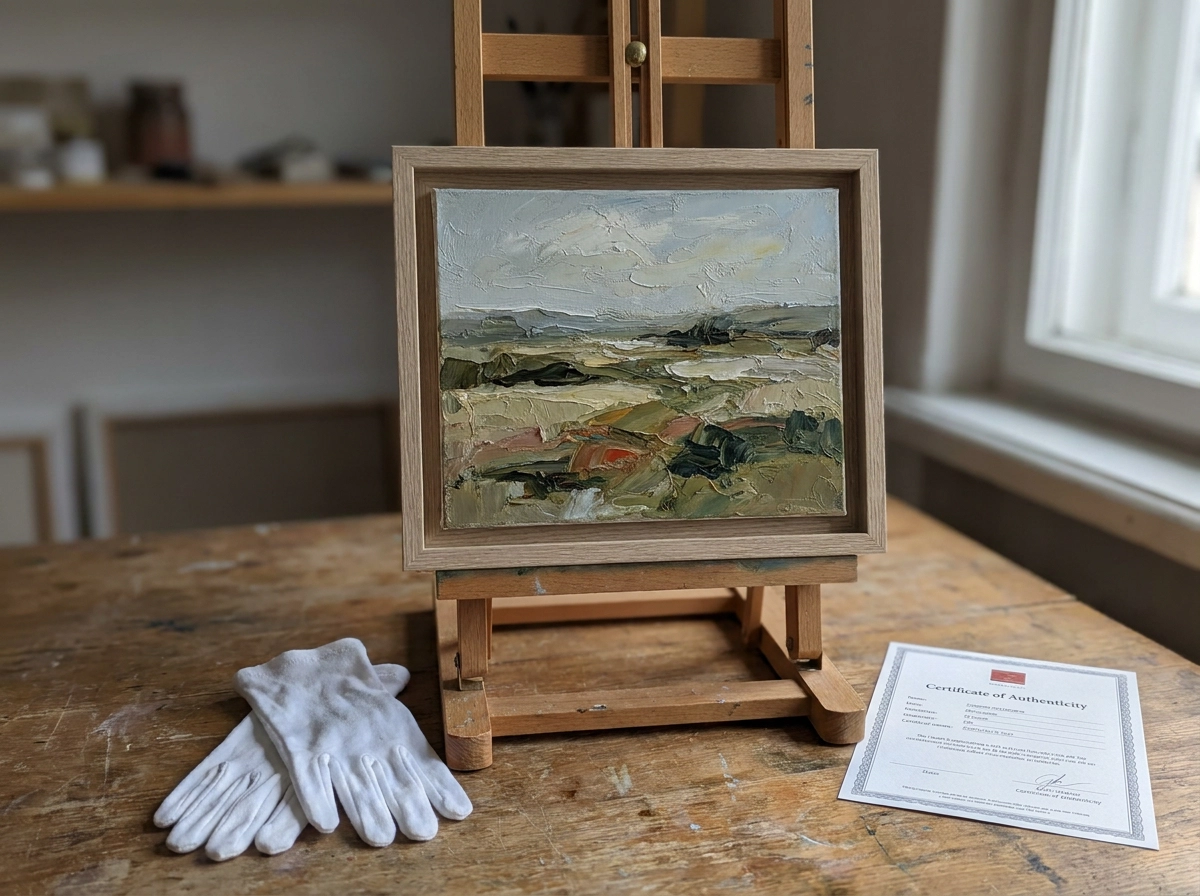
Proof closes a considered sale: provenance, exhibition history, a signed certificate of authenticity, and a plain statement of the resale royalty position, because a future resale of an original carries a 5% royalty under the Australian scheme and a careful buyer will ask.
Publishing prices suits mid-range originals and filters dead-end enquiries; price on application suits high-value, relationship-led sales. State which you use and why. Build pages around the artist’s name plus medium, subject and location, not broad category terms that attract browsers who will never buy an original.
Revenue Model 2: Editioned Prints
Product-shaped buyers search differently from the collector who spends months considering an original. They want a size, a format, a colourway or a piece to fill a particular wall, and they compare options side by side before deciding.
Build for that behaviour: collection pages organised by series or theme, size and format pages, individual product pages, a shipping and framing page, and a sold-out archive with a waitlist to catch the next release.
The royalty line does commercial work here. Under the Australian scheme a limited edition print is treated as an original, while posters and souvenirs are not, which makes stating that distinction in plain words a way of separating an edition from a reproduction in the buyer’s mind.
Authenticity is a live issue too. The Productivity Commission found around two-thirds of Indigenous-style souvenirs were made without Aboriginal or Torres Strait Islander input. State clearly who made the work and under what licence, and keep those findings confined to that market.
How to Describe Editions and Sizes on Product Pages
Once a buyer trusts the edition, the product page has to answer the practical questions.
State the edition size, how many remain and whether the edition is closed. “Edition of 50, 12 remaining” resolves scarcity before the question is asked.
List image size and paper size separately, always with units, and add a visual scale reference such as a ruler or a wall for unframed works. In practice, sizing questions are among the most common pre-purchase enquiries.
State what is not included: framing, hanging hardware, delivery timing, and whether colours may vary slightly from screen to screen. Buyers compare these details directly.
Define the vocabulary on the page: original, limited edition, open edition, reproduction, giclee and artist proof. Buyers use these terms loosely, so a short glossary helps buyers use these terms correctly before they commit.
Where a work exists in several sizes at different prices, give each size its own product page rather than a dropdown, so the specific search for that size has somewhere to land.
Revenue Model 3: Commissions
Editions reward clarity because the product already exists. A commission buyer is committing money to work that does not exist yet, so their search is process-shaped: how it works, what it costs, how long it takes, and what happens if they do not love the result. They are risk-averse, not browse-happy.
Build a commission overview, a process page with stages and realistic timelines, a pricing page or clearly banded ranges, a detailed FAQ, and two or three completed commission pages that show the journey rather than only the finished piece. Commissions are poorly documented as a revenue model; treat this structure as general industry practice and source every figure from your own completed jobs.
A process page should filter, not just explain. State plainly who commissions are not right for, whether that is very small work, very fast deadlines or heavily directed briefs. Each quote costs unpaid sketching and correspondence before the brief is confirmed, so enquiry quality matters more than volume.
The same discipline applies to risk before you sign any growth partner: see this pay-for-performance SEO guide.
The Two Pages That Pre-Empt Commission Objections
The price page and the FAQ do most of the work.
The price page should give banded ranges by size and complexity, not a single figure, then name what triggers additional cost: travel, framing, extra revisions. Describe deposit and payment staging in plain terms without quoting percentages or dates you have not set yourself.
The FAQ answers objections in the order a nervous buyer meets them. Cost and risk first: what they pay, when they pay it, and what happens if you cannot complete the work. Timeline second: expected completion, how slippage is handled, and the approval stages in between. Quality and change of mind third: who owns rights and reproduction, revision limits, cancellation and refund policy, and how the finished piece is delivered or installed.
Leave every blank for your own real terms. Borrowed template numbers are less defensible than your own, and a buyer can tell the difference.

Revenue Model 4: Licensing and Image Use
Licensing attracts a different buyer entirely: an art buyer, editor, publisher, brand or manufacturer seeking usage rights, not ownership, often working to their own production schedule.
Build a licensing enquiry page, a rights and usage terms page stating what is available and whether each series is exclusive or non-exclusive, a high-resolution file request route, and a licensing contact separate from the print sales queue. Your portfolio then doubles as a capability sheet: subject range, file resolution and formats, and which bodies of work are free of exclusive agreements.
Keep this proportionate. Licensing rarely justifies a rebuild, but a dedicated page plus a terms page prevents rights-seeking buyers from moving to the next artist. Searches are often image or subject led, so descriptive file names, alt text and series pages support discoverability before a buyer reaches the enquiry page. The same visibility gap affects community-facing artists, as our analysis of The Victorian Artists Society and the Google Visibility Gap shows.
What Stays the Same Across All Four Models
That foundation is shared across every model. A navigable portfolio means named collection or series pages, not one endless image grid, so someone deciding quickly can read it and a search engine can index it. Pair that with a real artist bio page and one consistent spelling of the artist’s name across the site and in image credits, because inconsistent credit lines split the signal.
Contact routes should match the models. A print buyer asking about size and a licensing buyer asking about rights should never land in the same inbox queue. Use descriptive file names, alt text on every image and compressed files so galleries load quickly and individual works rank on their own.
Then track enquiries against pages, not just visits. Without that habit, you cannot tell which model’s pages are producing work and which are producing nothing. Many Australian artists lack the foundational SEO structure that makes pages discoverable, and missing basics like these are part of why. None of this replaces the model-specific work. A tidy shared foundation with no product, process or rights pages still leaves the most likely buyers with nowhere to go.
What This Framework Does Not Claim
No search volume, ranking or conversion data backs this mapping. It is a recommended approach from The Brand Express, not a measured result. Treat it as a hypothesis to test against your own traffic, not a proven formula.
Australian statistics are old and narrow. Productivity Commission figures are from 2019-20 and cover Indigenous visual arts and crafts specifically. The Creative Independent survey cited in background research is from 2018 and heavily weighted to the United States. Neither should be generalised to all Australian artists. For wider historical context, see famous Australian artists, but market evidence remains thin.
The resale royalty is 5% for commercial resales from the second transfer onward. The sale-price threshold in Arts Law guidance is dated November 2010 and must be checked against current guidance before use on a live page.
Licensing and commission structures are not defined in any source behind this piece. Descriptions are general industry terms; any figures you publish should come from your own records. Where evidence is thin, label the claim as advice rather than data. That habit will serve you well on your own site.
Start With the Model, Then Build the Pages
Move from caveats to action. Start with last year’s income, split by originals, prints, commissions and licensing. Build your site around the largest line first. For that model, write the searches a real buyer would type, then check whether any page answers them directly. If none does, build that page next. Put the proof where the buyer looks: edition size and remaining stock for prints, provenance and resale royalty position for originals, process and terms for commissions, rights and usage for licensing. Apply the shared foundation from the previous section. If you run two models side by side, keep two structures side by side. One combined site organised around a single audience will keep underselling the other.
Conclusion
Start with your income split, build around the largest line, and treat this framework as a hypothesis to test. The revenue model is the starting point, the pages follow from there.
Frequently Asked Questions
Why should artists name their revenue model before optimising their website for SEO?
Generic SEO advice treats every artist as if they share one business model, but they do not. Naming your revenue model first (one-off originals, editioned prints, commissions, or licensing) points you toward the pages your specific buyers need. Chasing traffic borrowed from retail is less useful than attracting the right collector's enquiry.
What is the main job of an artist's portfolio website?
A portfolio website has one job: put a buyer, curator or commissioning client in a position to trust the work and act on it. Everything else either supports that or is decoration. Which pages are needed changes with the revenue model.
What pages do one-off original artists need, and what proof closes the sale?
Originals need individual work pages with dimensions, medium, year, price or price on application, framing details and multi-scale images, plus a studio and process page, an exhibition and press page, and a works available register. Proof includes provenance, exhibition history, a signed certificate of authenticity, and a plain statement of the resale royalty position.
How should editioned print sellers describe editions and sizes on product pages?
State the edition size, how many remain, and whether the edition is closed. List image size and paper size separately with units, and add a visual scale reference. State what is not included, such as framing, hanging hardware, delivery timing, and possible colour variation. Define terms like original, limited edition, open edition, reproduction, giclee and artist proof, and give each size its own product page rather than a dropdown.
What two pages does the post say do most of the work in pre-empting commission objections, and what should they cover?
The price page and the FAQ. The price page should give banded ranges by size and complexity and name what triggers extra cost, such as travel, framing or extra revisions. The FAQ should answer objections in order: cost and risk first, then timeline, then quality and change of mind, including rights, revision limits, cancellation and refund policy, and delivery or installation. The post advises using your own real terms rather than template numbers.