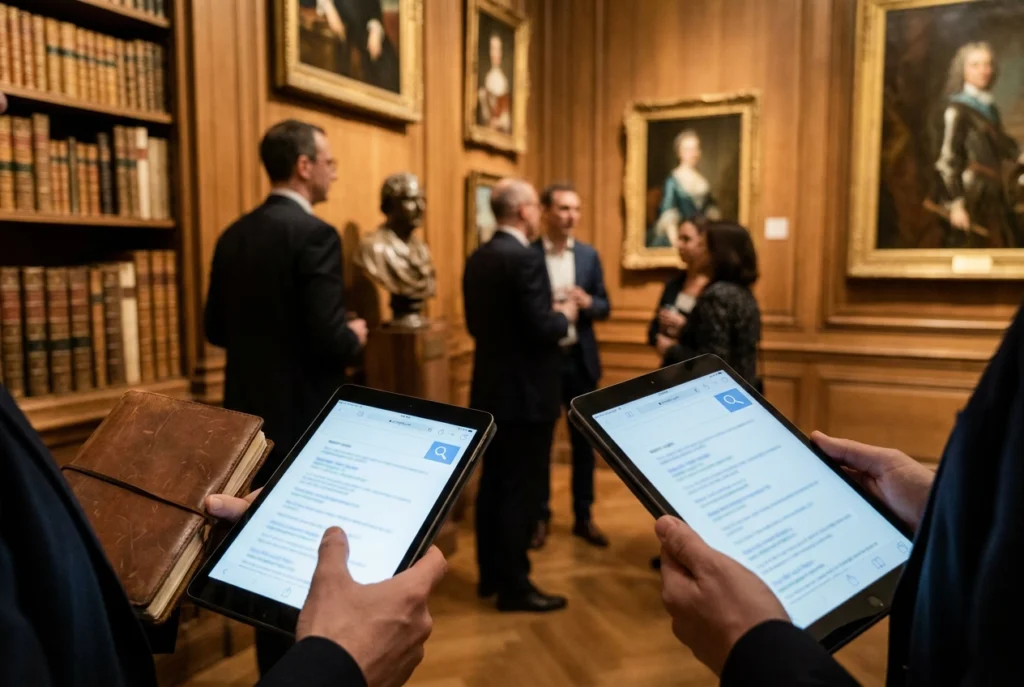
Imagine searching for one of Australia’s most storied art institutions and finding a digital footprint that barely scratches the surface of its rich legacy. That disconnect between reputation and online visibility is precisely what makes the Victorian Artists Society such a compelling case study in the modern cultural landscape.
Founded in 1870, the Victorian Artists Society stands as one of the oldest and most respected fine art organisations in the Southern Hemisphere. Yet despite its remarkable heritage and active programming, many searches for the society reveal a visibility gap that limits its reach to newer audiences and potential members.
In this analysis, we will break down exactly where that gap exists, why it matters, and what it means for cultural institutions navigating the competitive terrain of organic search. Whether you are an arts administrator, a digital strategist, or simply someone who cares about how heritage organisations communicate their value online, this piece will give you a clear-eyed look at the mechanics behind the problem. More importantly, it will point toward the practical steps that could close the distance between the society’s true stature and its digital presence.
The VAS Digital Presence: What Is Actually Working
The Victorian Artists Society maintains an active presence across both Facebook and Instagram (@victorianartistssociety), consistently publishing exhibition results, award announcements, and event updates that generate genuine community engagement. The VAS Summer Exhibition 2026 demonstrated this clearly, with award announcements attracting congratulations from member artists and affiliated organisations including Ringwood Art Society. Named recurring events such as the 9×5 Exhibition reinforce the society’s programming identity and resonate strongly within its established follower base.
This is meaningful organisational activity. It signals institutional health, member investment, and consistent creative output. The challenge, however, is not content creation. The VAS is producing content. The challenge is discoverability beyond the existing follower base, and this is where a critical distinction must be understood.
Social engagement metrics and search visibility are measured by entirely different mechanisms and do not transfer to one another automatically. A post receiving strong engagement on Instagram does not earn a ranking position in Google search results. Social media reach is algorithmically throttled, meaning even high-performing posts reach only a fraction of followers, and virtually no one outside them. Research into the digital presence of emerging visual artists consistently confirms that platform-dependent visibility creates structural career limitations that organic search visibility does not.
For VAS member artists, this gap is commercially significant. The society’s social activity builds community value and peer recognition, but it does not generate inbound search traffic to individual artist portfolios, studio websites, or commission inquiry pages. A buyer searching Google for “original oil painting Melbourne” will not find an artist through a VAS Instagram post. That buyer discovers artists through indexed, optimised web pages, and without them, the opportunity is lost entirely.
Why Strong Social Engagement Does Not Convert to Search Discovery
The engagement numbers visible on VAS social posts tell a revealing story. The Summer Exhibition announcement on Instagram attracted 11 comments, almost entirely from fellow artists and peer organisations. Responses included “Congratulations 👏👏,” “Such a beautiful piece. Well deserved,” and emoji-only reactions from accounts like Ringwood Art Society. These are genuine expressions of community warmth, but they carry no commercial signal. A person typing “original oil painting Melbourne” into Google is categorically different from an artist peer double-tapping a post in their feed. Likes, comments, shares, and follower counts measure how well an account resonates with its existing audience. They do not measure purchase intent, and that distinction matters enormously for artists trying to reach new collectors.
The structural problem runs deeper than engagement quality. Instagram and Facebook are closed ecosystems: content published inside them is not indexed by Google and does not appear in search results. An artist who builds their entire digital presence on social platforms is, from a search perspective, invisible. A collector searching for “Victorian landscape watercolour commission” or “contemporary Australian figurative painting” will not encounter that artist, regardless of how many followers they have accumulated or how frequently they post. The Victorian Artists’ Society has over 155 years of institutional history, yet the Wikipedia entry for the organisation ranks in search results precisely because it is an indexed, crawlable web page, not a social post.
Compounding this invisibility is algorithmic throttling. Organic reach on Facebook business pages typically falls between one and five percent of total followers, and Instagram business accounts perform similarly. Even a well-followed artist account reaches only a fraction of its existing audience with each post, and that reach does not extend outward to prospective buyers who have never interacted with the account before. The VAS President’s fundraising video accumulated 47 reactions and 1,900 views, modest figures for an organisation with 155 years of reputation and an active national membership base. That ceiling reflects the structural limits of organic social reach in 2026, not a failure of content quality.
The compounding nature of SEO presents a direct contrast to this dynamic. A well-optimised artwork page, with descriptive alt text, a keyword-informed title, and its own indexable URL, continues attracting search traffic months and years after publication. A social post announcing the same artwork has an effective lifespan measured in hours before it disappears into the feed. Social media functions well as a validation layer, reinforcing trust once a buyer has already discovered an artist through search. It is not, however, a discovery engine. For Victorian artists serious about reaching high-intent buyers, the distinction between these two roles is the starting point for building a digital strategy that actually converts.
How Art Buyers Actually Search for Work in 2026
Understanding how art buyers actually search in 2026 requires setting aside a common assumption: that buyers know which artist they want before they start looking. Research from the Helen Brown Group confirms that collectors identify art through specific attributes, including subject matter, medium, and style, rather than by artist name. A buyer browsing for something to hang above a living room sofa is not typing “John Smith artist Melbourne” into Google. They are typing “abstract blue painting for living room” or “original watercolour of mountains.” For VAS member artists who are unnamed and undiscovered by that buyer, the only path to visibility runs through descriptive, attribute-led search terms. Artists who do not appear under those terms do not appear at all.
Google Images and Pinterest now function as the primary discovery surfaces for art buyers, operating in the same way that gallery walls once did for previous generations of collectors. The Art Basel and UBS Global Art Market Report 2026 documents a decade of structural shift toward online art sales, with a younger, digitally-native collector cohort entering the market through screens rather than through established gallery relationships. This cohort browses visually first. If an artist’s work is not indexed, labelled, and surfaced through image search, it is functionally invisible to this growing buyer segment, regardless of how accomplished or exhibition-active that artist may be.
The distinction between high-intent and low-intent search queries matters enormously here. Someone searching “watercolour painting” is curious. Someone searching “original watercolour of mountains” is shopping. Long-tail, descriptive queries signal a buyer who has already made several decisions: the medium, the subject, and the fact that they want an original work. Capturing this traffic requires artwork pages and image metadata that match the precise language buyers use.
Pinterest deserves particular attention as a parallel discovery channel that operates independently of Google’s algorithm. Properly titled and described pins create a second indexable surface for an artist’s work, driving referral traffic that compounds over time regardless of changes to Google’s ranking logic.
For VAS members working across Melbourne and regional Victoria, location-specific terms such as “Melbourne oil painting artist,” “Victorian landscape commission,” or “local abstract artist Melbourne” represent a concentrated opportunity. These queries carry high buyer intent and, at present, face comparatively limited competition from artists who have actively optimised for them.
The Three Highest-Impact SEO Moves for VAS Member Artists
Given the search behaviour patterns described in the previous sections, the practical question for VAS member artists becomes: where exactly should effort be directed first? Three tactics consistently rank as the highest-impact moves for artists operating in 2026, and their combined time investment falls well under a single working day.
Move 1: Alt Text Optimisation (Approximately 5 Minutes Per Artwork)
Alt text is the single highest-priority image SEO tactic available to artists, and it requires no technical expertise whatsoever. A descriptive alt tag such as “original oil painting of the Yarra River at dusk, Melbourne, 60x80cm” communicates to Google precisely what an image contains, making it discoverable in Google Images searches. Before applying any other tactic, artists should also address a more foundational step: renaming image files descriptively. Replacing a default filename like IMG_4872.jpg with victorian-landscape-oil-painting-gippsland-sunset.jpg adds measurable SEO signal at zero cost, requiring nothing beyond adopting a consistent naming convention from this point forward. These two steps, applied together at the point of upload, establish the minimum viable foundation for image discoverability. For VAS members referencing their institutional affiliation, including “Victorian Artists Society” or “VAS member artist” within alt text and filenames can also leverage the society’s established brand authority in search.
Move 2: Individual, Indexable Artwork Pages (Approximately 20 Minutes Per Piece)
Creating a dedicated, indexable web page for each individual artwork, rather than relying on thumbnail grids within a gallery view, is the second-highest priority tactic. Each page should include the artwork title, medium, dimensions, price, provenance, and a paragraph of descriptive copy. Collectively, these elements build the search relevance that a thumbnail image alone cannot generate. The VAS Gallery website already demonstrates this architecture at the institutional level, maintaining separate pages for current exhibitions, award-winning works, and sold pieces. Member artists can replicate this same structural logic on personal websites, giving each work its own permanent, crawlable address.
Move 3: Image XML Sitemap Submission to Google Search Console (Approximately 10 Minutes Total)
Even well-optimised images may not surface promptly in search results without a submitted image XML sitemap. This step, taking approximately 10 minutes in total, signals to Google that an artist’s full image library exists and is ready to be crawled and indexed. It is the operational step that connects all previous optimisation work to actual search visibility.
Taken together, these three moves create something social media posts structurally cannot: a permanently discoverable archive. Social content published by VAS on Facebook and Instagram decays in visibility within days due to algorithmic throttling. An indexed artwork page, by contrast, remains findable indefinitely and compounds in value with each new piece added. For artists producing work across VAS’s 50-plus annual exhibitions, this represents a scalable, low-maintenance discovery system that grows stronger over time.
Local SEO: The Melbourne Advantage Most VAS Artists Are Not Using
For VAS member artists offering commissions or in-person studio sales, the geographic dimension of their market is an asset most are not converting into search visibility. Search terms like “portrait commission Melbourne” or “buy original art Victoria” represent high-intent queries from buyers who have already decided to purchase and are now choosing who to buy from. Generic social posts cannot surface in these searches. Local SEO can, and according to the 2026 artist SEO framework from ImageSEO, the full local SEO setup for a commission-based artist requires only one to two hours of initial investment, making it one of the highest-return actions available at any skill level.
The Google Business Profile sits at the centre of this opportunity. It is free, it directly influences whether an artist appears in the Google Map Pack (the prominent three-listing block shown above organic results for local searches), and the majority of working artists appear not to have claimed or optimised one. The performance differential is significant: businesses with 100 or more photos on their GBP receive 520% more calls than the average listing. For artists, whose work is inherently visual, an active and photo-rich profile is not a supplementary tactic; it is a primary visibility channel. Category selection matters here too. Artists should test whether “Artist,” “Art Studio,” or “Art Gallery” best reflects their practice, since the primary category shapes which local searches trigger the listing.
The presence of Ringwood Art Society in VAS’s Instagram comment section deserves more than passing notice. Per Melbourne’s 2026 local SEO landscape, Melbourne’s distinct suburban identities make suburb-level targeting a meaningful differentiator, and regional societies may already be capturing search terms that VAS member artists in those areas are not contesting. Whoever optimises for location-specific terms first captures that search territory.
Location-specific website content is the structural foundation beneath all of this. A page that describes a Melbourne studio practice, references the Victorian landscapes informing an artist’s work, or outlines a commission process for local clients sends explicit geographic relevance signals that help Google connect that artist to location-based searches. As Mastering Local SEO for Melbourne businesses in 2026 confirms, crafting location-specific content is a core pillar of effective local strategy, and most artists’ websites currently lack it entirely.
Finally, VAS exhibition participation is an underused citation asset. Mentioning specific exhibition names, the East Melbourne gallery address, and Victorian arts context on an artist’s own website creates local citation signals that connect their individual profile to the VAS’s established geographic authority. This is a direct competitive advantage that requires no budget, only deliberate documentation.
The ROI Argument: Why SEO Compounds Where Social Cannot
Per Artlogic’s April 2026 analysis, artist and gallery websites have crossed a significant threshold: they are no longer digital brochures sitting behind social profiles. They are primary sales and visibility channels expected to introduce artists, capture collector interest, and complete transactions. This repositioning makes SEO investment structurally different from any other marketing spend for artists. A social campaign generates impressions. A properly optimised website generates revenue pathways that operate continuously, without ongoing input or platform dependence.
The structural difference comes down to compounding versus consuming. Social media visibility is entirely conditional on continuous posting. Artist Anna Heimkreiter, documenting her experience at Where Wonder Waits, describes the reality plainly: stop posting, and you effectively disappear. A large following does not translate to consistent sales, and the effort invested in mastering reels, stories, and hashtags builds equity on infrastructure the artist does not own. An SEO-optimised website page operates differently. Once built, indexed, and ranked, it continues attracting purchase-intent traffic for months or years without the same ongoing maintenance burden.
The two platforms most commonly positioned as alternatives, Etsy and Instagram, each carry limitations that compound over time. Etsy applies transaction fees that reduce artist margins on every sale, and market saturation makes organic discovery increasingly difficult without paid promotion. Instagram’s algorithmic throttling means that even accounts with substantial followings cannot guarantee their posts reach buyers at the precise moment purchase intent is active. Neither platform converts passive discovery into lasting search presence.
For VAS member artists with substantial back catalogues, the compounding dynamic of image SEO is particularly consequential. Each individual artwork page, properly optimised with descriptive alt text and indexable metadata, becomes a permanent entry point into Google search. A body of fifty works, each with its own page, represents fifty independent discovery surfaces. Add ten new pieces, and the SEO value of the catalogue grows accordingly. Social media cannot replicate this accumulation.
The asymmetry for VAS members is direct. Exhibition investment, studio time, and physical art-making require significant ongoing effort and cost. The VAS Gallery already supports an online sales infrastructure with a “Recently Sold” section, confirming that digital conversion is part of the commercial model. But exhibition visibility without search optimisation means that collector discovery ends when the show does. A one-time investment in website SEO transforms each exhibition into a compounding, searchable asset, something no volume of Instagram posts can substitute.
How The Brand Express Supports Victorian Artists and Arts Societies
The Brand Express works with artists, sole traders, and growth-minded businesses to build bespoke SEO strategies grounded in how their specific buyers actually search. For Victorian artists, that means a focused combination of image SEO, local Melbourne keyword strategy, and technical website optimisation that connects finished work to collectors who are already looking for it. The approach is not borrowed from e-commerce or service industry templates. It is built around the documented reality that art buyers search with visual, descriptive language, and that ranking for the right long-tail queries requires deliberate, artwork-level optimisation.
Where generic digital marketing agencies apply standardised keyword lists, The Brand Express starts from a different premise. Keyword research for artists must precede every implementation decision, because the first keyword an artist assumes is relevant is rarely the phrase collectors are actually typing. The Brand Express formalises this research phase into every artist engagement, mapping real search demand before a single page is optimised or a single image tag is written.
For arts societies and their member communities, the offering extends to content gap and competitor analysis. Regional organisations are already capturing search terms that VAS members could be ranking for. Identifying those gaps precisely is what separates a strategic SEO investment from guesswork.
The starting point for most artist clients is a structured SEO audit that maps current search visibility, identifies missing image metadata across existing portfolios, and prioritises the highest-impact fixes. Measurable improvements in search visibility are typically achievable within the first 60 days of implementation, particularly for artists whose image alt text, file naming, and individual artwork pages have never been optimised.
Victorian artists and arts society administrators who want a clear picture of where their digital visibility currently stands are welcome to contact The Brand Express for a no-obligation consultation scoped specifically to the Victorian arts market.
The Visibility Gap Is Closable — But Only If You Act on It
The VAS community is not lacking in artistic output, commitment, or exhibition-ready talent. What it lacks, collectively, is search discoverability — and that is a technical and strategic problem with a clear, accessible solution. The gap between producing remarkable work and being found by the collectors who would pay for it is not an artistic gap. It is a structural one, and structure can be changed.
The three image SEO tactics covered in this post — alt text, individual artwork pages, and image XML sitemaps — require less than a day’s work per artist and create a permanently compounding search asset. Unlike social posts that decay within hours, optimised artwork pages continue attracting high-intent buyers for months and years after publication. Local SEO, Pinterest as a parallel discovery channel, and a well-structured artist website are not advanced tactics reserved for large commercial galleries. They are accessible, immediately actionable moves available to every VAS member artist, regardless of technical experience or marketing budget.
The cost of inaction is invisible in the short term but measurable over time. Every month an artist’s work remains unsearchable is a month of potential collector discovery, commission inquiries, and direct sales that either went unmade or defaulted elsewhere. The VAS’s own online gallery confirms that buyers are already purchasing work through digital channels — the question is whether individual artists are positioned to capture that demand.
If your work deserves to be found, and it does, the next step is ensuring Google agrees.
Conclusion
The Victorian Artists Society’s story is a reminder that legacy alone does not guarantee digital visibility. Three takeaways stand out from this analysis: heritage institutions face a genuine and measurable Google visibility gap, organic search directly influences audience growth and membership, and the tools to close that gap are well within reach for any committed arts organisation.
If you manage a cultural institution or advise one, treat your digital presence with the same seriousness you give your programming. Audit your search visibility, invest in purposeful content, and make it easy for curious audiences to find you.
Australia’s oldest art societies deserve to be discovered by the next generation of artists and patrons. With the right digital strategy, institutions like the Victorian Artists Society can honour their past while building an audience fit for the future.